
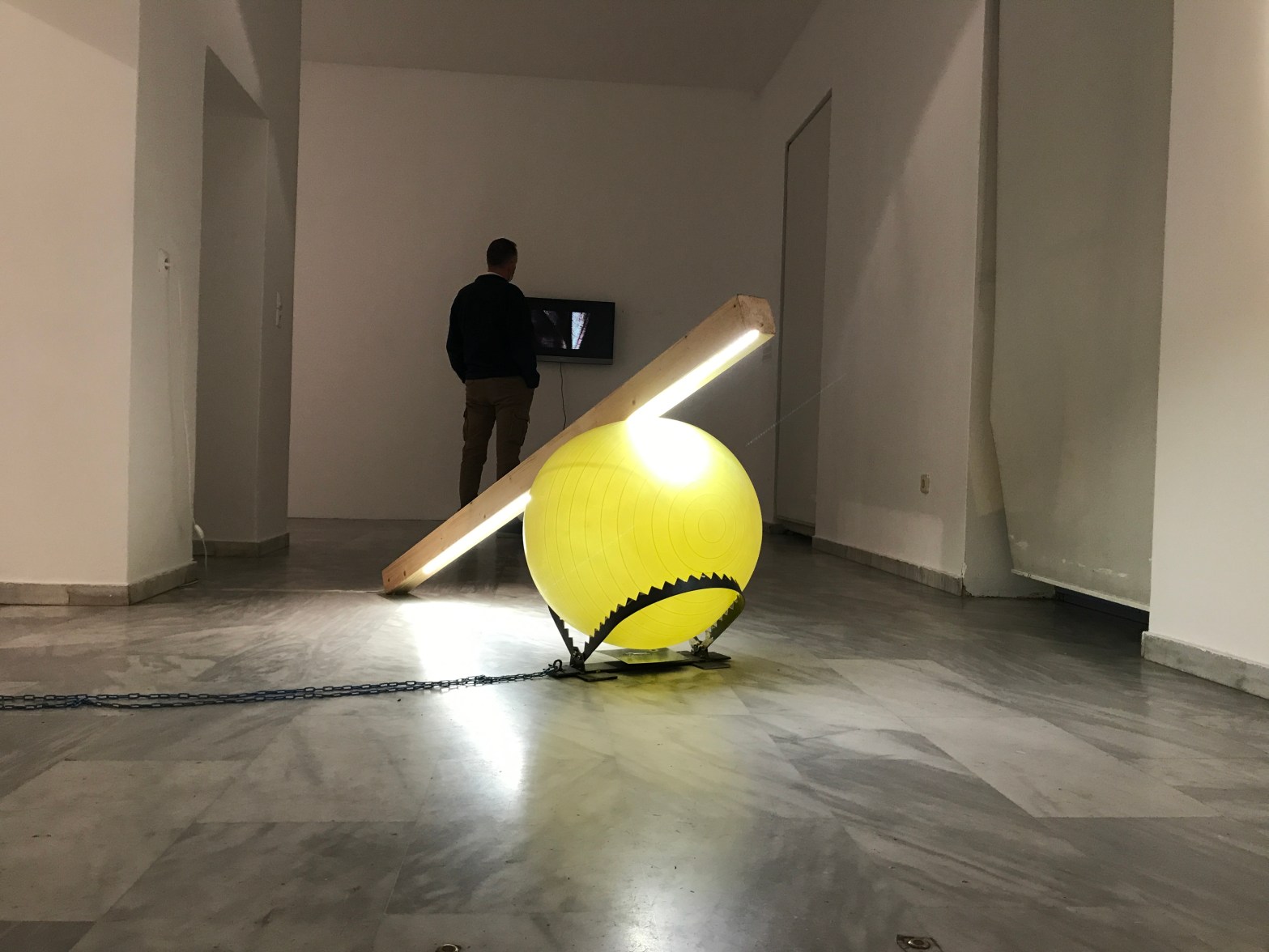
Collective practice forms a second axis of Isidorou’s work: long-term, artist-run structures that operate as laboratories of risk, attention and critical play.
Rather than “projects” in the usual sense, these constellations test how art, writing and urban research can interfere with the dominant narratives of democracy, development and cultural progress.
They are methods of staying with a place, exhausting its stories, and inventing forms of return when “home” has already become a fiction.
Butoh Armé
Butoh Armé is a performance and sound collective formed by Simon Barker, Yiannis Grigoriadis, and Yiannis Isidorou. The group develops compact situations of meditative noise, constrained movement, poetic fragments, and durational presence. Sound operates as a dense field of repetition and pressure, shaping attention and temporal focus.
The performances emerge in peripheral zones of cultural circulation, where bodies, sound, and space assemble into short-lived environments of thought. Appearances are infrequent and concentrated, acquiring a near-mythical status through scarcity and intensity.
At the same time, Butoh Armé sustains a playful relation to chance, mischief, and tactical disorder. The work carries an evident attachment to luck, collective intuition, and the pleasure of staying slightly out of place.
Salon de Vortex
Salon de Vortex is a long-term collaboration with artist Yiannis Grigoriadis, active since 2009.
Working through complex installations, texts, sound and archival material, the duo treats the city as a porous mass of memories, infrastructures and ideological debris.
Their work reading the urban fabric as a battlefield between reconstruction, everyday survival and cultural homogenisation. The projects often start from very concrete material and unfold into reflections on class, micro-bourgeois desire, post-war development and the managed forgetting of violence.
With Ökumene – From the Innermost to the Endoterra (2023), Salon de Vortex completes a long cycle of urban, archival, and installation-based work. The centre of gravity shifts toward Butoh Armé, where performative, sonic, and durational research extends into the visual and spatial field.
- Mofferism (2011)
A hybrid installation of pamphlets, theory-fiction fragments, sculptural mutations of metropolitan equipment and a video-work on cultural discomfort. Working with 1:1 objects and real-time processes, the project treated estrangement, semantic drift and purposeful theoretical “misfires” as operational tools. It sketched a proto-taxonomy of behaviour in late-urban life while articulating, for the first time, the artists’ shared language: an eccentric system for reading the present through its raw material imprints and undoing the illusion of stability. - Rebuilding Dialectics (2013)
A large-scale installation based on documents from the “golden age” of Greek post-war development: parliamentary archives, propaganda for reconstruction, domestic relics and precise casts of urban surfaces. The work reads reconstruction as an ideological machine that built wealth, kitsch and cultural uniformity on top of unresolved violence. - Urbanism for Dummies (2013)
A year-long residency and programme at CheapArt that turned the gallery into a “public bureau” for monitoring symptoms of the contemporary metropolis. Artists, writers and theorists were invited to develop tactics for observing ignorance, radicalism, intensified discontent and urban alienation, treating art and poetry as tools for traversing the mechanisms of planning and everyday governance. - Violence and Legitimacy 2013
An installation presented at Art Athina, built around a historical revolutionary text in order to stage a condensed representation of the contemporary metropolis: the descent from sky-line views to cracks and stains, the accumulation of material “truth” and its authoritarian afterlife, the way legality coats structural violence with a thin layer of reason. - 851 Athens–Nikaia & NICE! (2015–2016)
Works that shift attention from the metropolitan centre to the western suburbs, taking a former bus line and an industrial cultural centre as starting points for a long-term exploration of memory, execution sites, post-war suburban life and the later appearance of neo-Nazi violence. Through narrative devices, archives and psychogeographic wandering, these projects attempt to map the possibility (or impossibility) of return. - Decades / Δecades (2018)
A series of works that treat the post-war period as a single, continuous block of time. Using collage, found photographs, domestic objects and sound, the project focuses on memory and loss, on the way beliefs and “negative self-definitions” are sedimented into an incoherent identity. Forgetfulness appears not as mere lack, but as a mechanism of constant reconfiguration. - Origin (2020)
Origin is approached as a hypothesis rather than a stable root: an uncanny subset of the past that leaks into a fractured present. Impressions, narratives and archival fragments mediate knowledge; documentation starts to dominate experience. The project argues that amnesia is one of the most vivid forms of memory, and uses sculptural assemblages, video and text to disturb the fetish of the archive. - Ökumene – From the innermost to the endoterra (2023)
A continuation of Origin: recordings, fragile constructions and “controversial morphological declarations” revolve around the interaction of place and subject, departure and conquest, uprooting and desertification, and the high-frequency oscillation between manic joy and deep despair. The work insists on contact with matter as a mnemonic technique and re-describes experience through unorthodox assemblages that fill the space almost suffocatingly.
Across these works, Salon de Vortex approaches the city as a labyrinth of micro-histories, where every gesture of classification is also a form of sabotage.
intothepill.net
intothepill (2006–2010) was an artist-run platform for experimental video, poetry, theory, and new media, initially formed by Yiannis Isidorou, Lina Theodorou, and Katerina Iliopoulou. Shortly thereafter, Yiannis Grigoriadis and Vassiliea Stylianidou (Berlin) joined the platform..
It operated as a decentralised lab for editing, collective research and aesthetic risk, publishing online issues and staging interventions across museums, festivals and independent spaces.
intothepill generated situations: temporary coalitions of text, image and performance that treated the city as a volatile medium.
Projects such as Soundrugs, 7Athens24, It Sounds Like a Capital, Athens by Sound, and a long list of exhibitions and screenings across Europe, shaped an early ecology of experimental moving image in Greece at a moment when no institutional framework existed for it.
intothepill provided the discursive and logistical engine behind several later works — including Karaoke Poetry Bar — testing how a collective can distort formats, short-circuit expertise, and let poetry contaminate video, space and public attention.
Karaoke Poetry Bar
Before Salon de Vortex, a series of collective situations explored the collision of poetry, performance and image-making.
Karaoke Poetry Bar (with Katerina Iliopoulou and others, 2007) was a large-scale installation and “trap” staged in an industrial loft in central Athens, combining multiple video works, a functioning bar and an open stage. Over several nights, visitors chose poems from a catalogue and performed them live, reading from a screen. The work treated the audience, poets and visual artists themselves as the actual material of the piece. A foundational gesture that reintroduced poetry to the Athenian scene as a lived situation, anticipating the editorial and performative logic later developed in FRMK.
Instead of celebrating the solitary, “serious” poet, the project tested:
- whether institutionalised art can still produce genuine experience,
- whether poetry can become a risky, physical practice rather than a protected object,
- how shame, mistakes and ridicule might be preferable to the frozen respectability that suffocates living art forms.
Within this context, intothepill functioned as a broader discursive and curatorial platform for experimental poetry, theory and visual art, using events, digital publishing and collective editing to unsettle the distinction between text, performance and installation.
Dangerfew
Dangerfew is a long-term writing platform structured around reading, annotation, and slow accumulation. It engages with moments of cognitive overload, historical compression, and everyday disorientation produced by extended social and political strain.
Texts unfold through essayistic fragments, satire, poetic condensation, and cultural diagnosis. Writing functions as a mode of calibration: a way to measure scale, consequence, and duration beyond the immediacy of events.
The platform cultivates a shared space of thought where references, concepts, and affects circulate without simplification. Attention is directed toward how situations form, how habits of perception are shaped, and how language absorbs pressure over time.
Methods & motives
Across these constellations, collective practice is treated as a shared exposure to risk. The work often begins with highly specific sites and materials – a cracked pavement, a suburban bus route, a traffic light, a family car, a recording of a demonstration – and pushes them until they reveal the politics of memory and the absurdity of official narratives.
Several recurring positions underpin this work:
- Art as creation of inequalities
Art is understood as a way of breaking with common taste and re-describing it through that break: a field of experience rather than a model of behaviour. - The artist as anti-political saboteur
The artist appears as a “professional amateur”, operating at the edges of legality, assessing risk, planning escape routes and attacking the clichés of cultural production without promising redemption. - City as porous mass
The metropolis is read as a hollow organisation, a fossil and a fiction at once: a tangle of pipes, stairwells, bus lines and waiting rooms that produces both enforced passivity and unexpected forms of attention. - Memory as both refuge and trap
Homeland is an unstable, privately drawn map of impressions, projections and losses. Return is staged as an impossible journey that nonetheless structures desire, research and form.
Within this framework, collective practice is a long exercise in staying with difficult places, resisting the small comforts of cultural consensus, and inventing games that can still hurt a little.
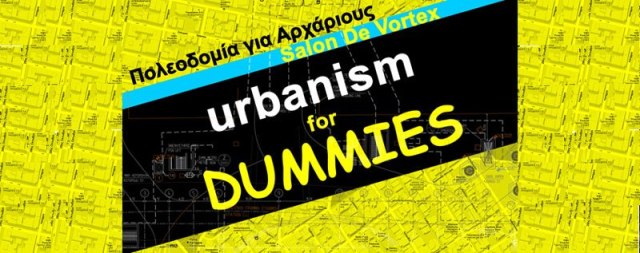
Long-term collaboration with Yiannis Grigoriadis on installations and research projects using sculpture, video, text and archives.
Salon de Vortex approaches the contemporary city as a laboratory, testing forms of critique, urban mythologies and the desire for community.
FRMK is an ongoing editorial organism: a poetry–theory journal, a field of experimental writing, and a laboratory for text–image editions. Through long-term editorial collaboration, it explores the materiality of language, collective thinking, and the unstable borders between document, critique, and poetic form.
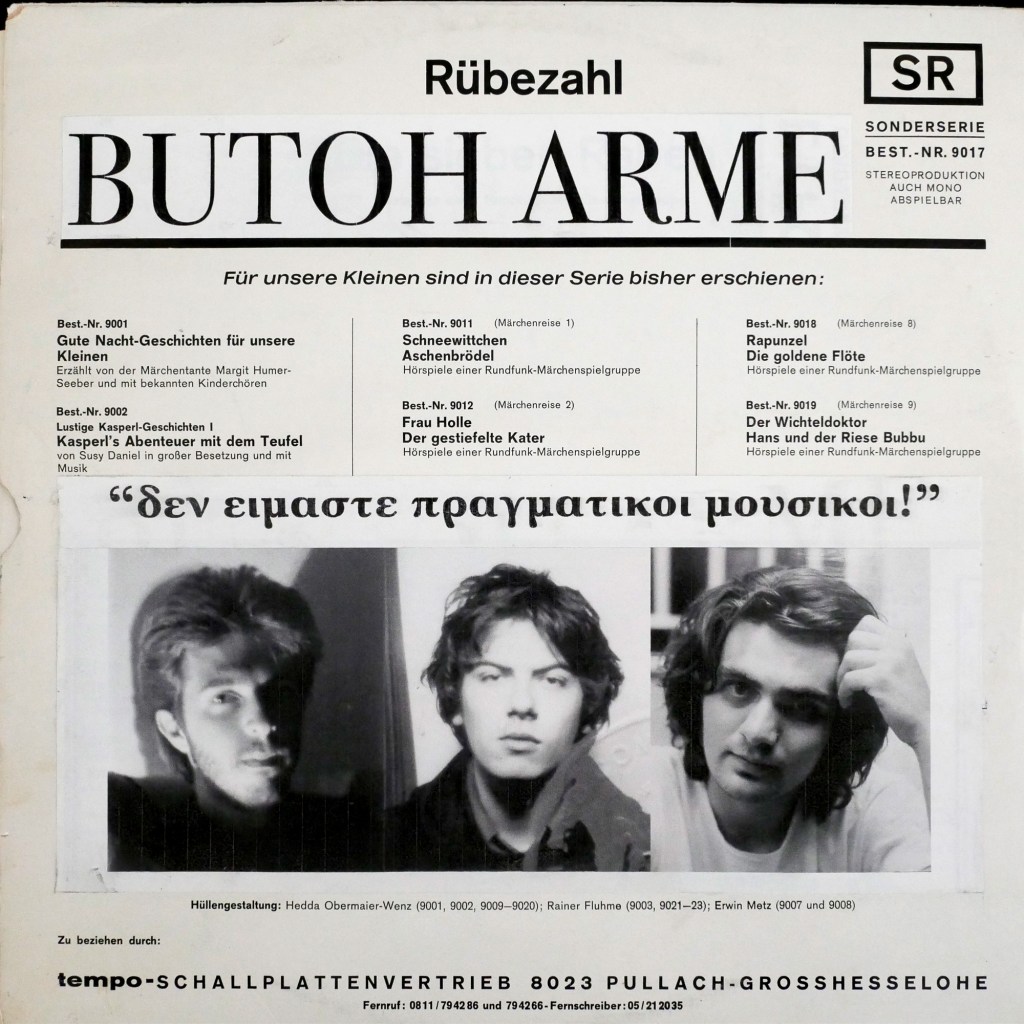
Co-founded with Simon Barker and Yiannis Grigoriadis, Butoh Armé investigates the city through ritual, waiting, and sonic intensity. The work unfolds across rehearsals, noise performances, movement research, and urban dérives, treating sound as a form of listening to the body and its thresholds.
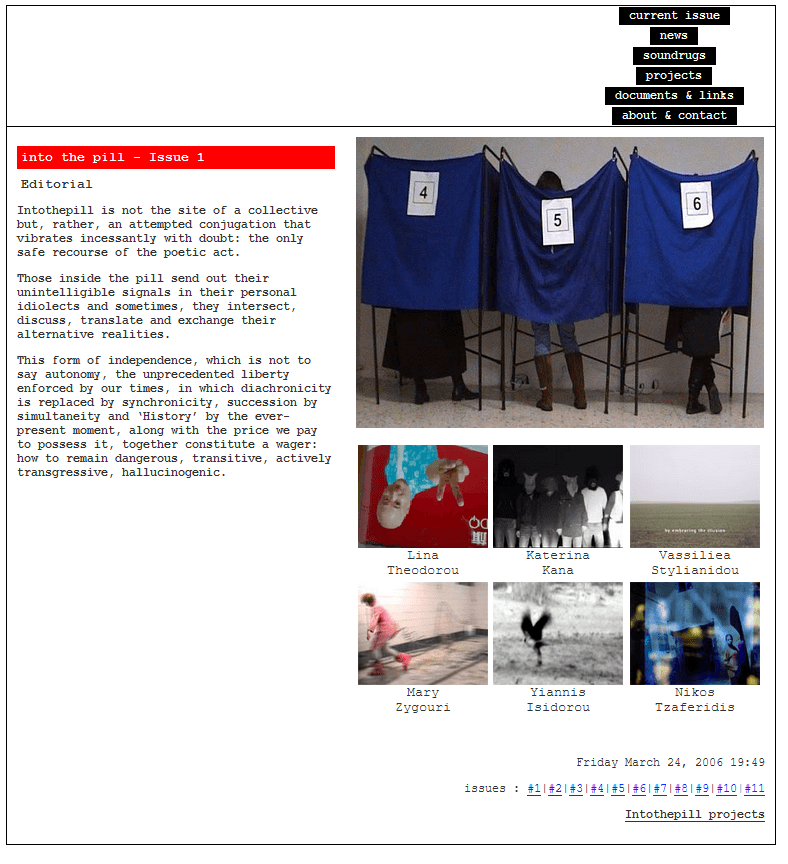
intothepill.net functioned as an early artist-run platform for experimental moving image, digital collaboration, and collective writing. It hosted video works, theoretical fragments, and city-based experiments, creating one of the first informal networks of contemporary media production in Athens.
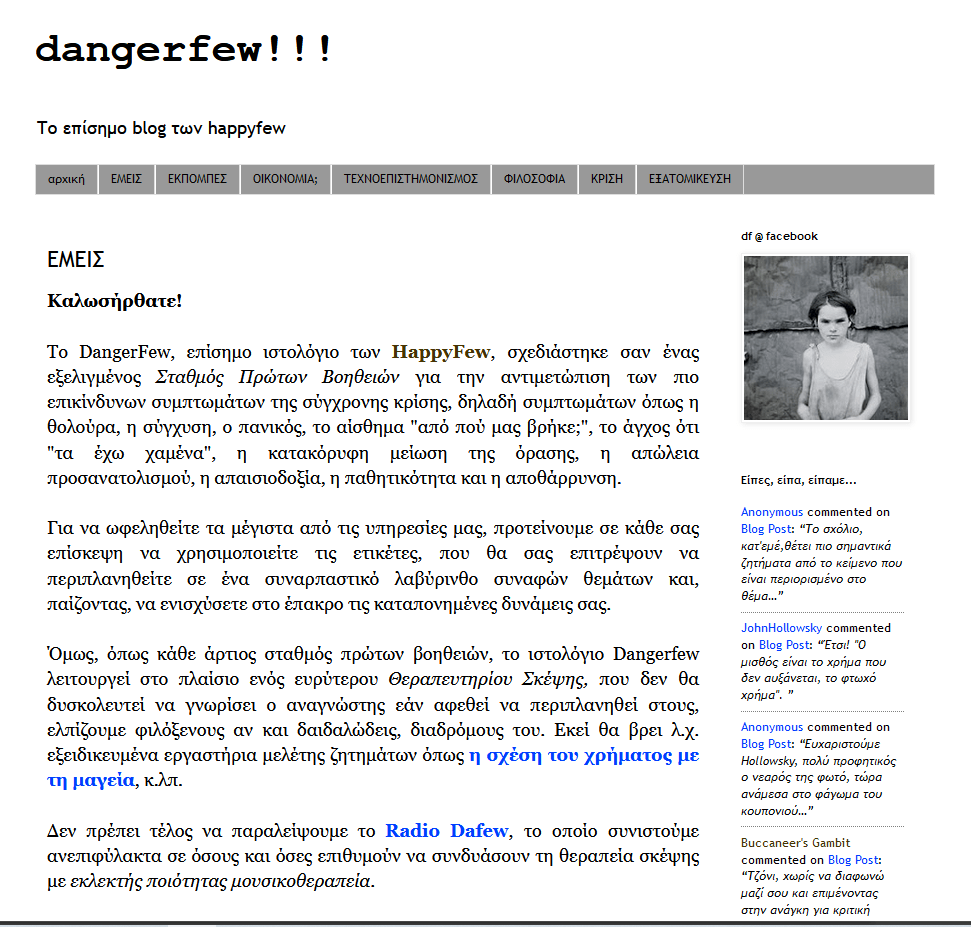
A platform for essays, translations and critical interventions on contemporary culture.
Dangerfew operates as a collective field of analysis and experimental publishing, developing counter-institutional perspectives on art, philosophy, politics and the urban condition.
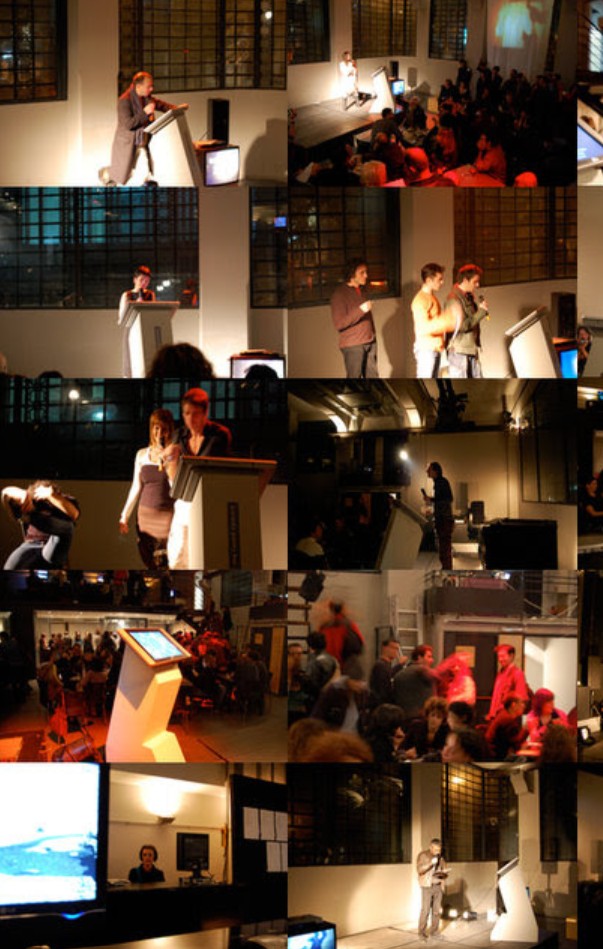
The Karaoke Poetry Bar brought poets, artists, and performers into a shared space of voice, risk, and improvisation. It became a generative point for later collaborations, including the constellation that eventually formed FRMK. A temporary structure that left a long afterimage.
 yiannis isidorou